


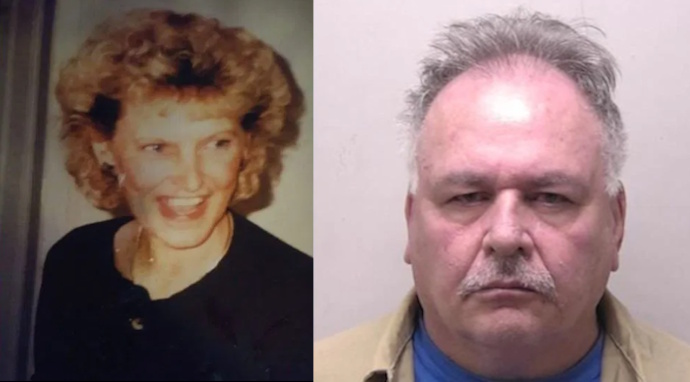
Executive Summary
- A Grand Traverse County jury convicted 64-year-old Steven Gary Koon of second-degree murder on June 8, 2026, for the 1989 killing of 41-year-old Linda Marie Meteer. Meteer, a mother of five, disappeared on April 20, 1989, after a night out in Traverse City and was found beaten to death by a hunter on April 27, 1989.
- The case went cold for 35 years until the sheriff’s office reopened it in 2024 with help from Western Michigan University’s Cold Case Program. Investigators used modern forensic tools (mitochondrial DNA testing and fiber microscopy) to link Koon to the crime. He was arrested Feb. 18, 2025, on an open murder warrant (letting the jury decide first- or second-degree).
- At trial, prosecutors presented new DNA and fiber evidence along with original case files, while the defense highlighted gaps and alternate suspects. Witnesses – including friends of the victim and law enforcement – testified about the night of the crime and subsequent investigation. The defense suggested Meteer’s ex-boyfriend (Charles Manville) could have been the perpetrator.
- After two days of deliberations, the jury acquitted Koon of first-degree murder but found him guilty of second-degree murder. Sentencing will occur later; second-degree murder in Michigan carries up to life imprisonment. The verdict brings long-awaited closure for Meteer’s family and friends, who praised the persistence of law enforcement.
Background: Disappearance and Discovery (April 1989)
Linda Marie Meteer, age 41, was a Traverse City mother of five. On the night of April 19–20, 1989, she and her friend Sally Horton spent the evening at Chumley’s Bar (Chum’s Corner) and Spike’s Peak in Grand Traverse County. Horton testified she saw Meteer leave Spike’s Peak around midnight, walking back toward the bar. Meteer was reported missing the next day. Ten days later, on April 27, 1989, a mushroom hunter discovered Meteer’s badly beaten body in the remote Hoosier Valley area south of Traverse City. A medical examiner later determined Meteer died of blunt-force trauma – multiple broken ribs and a mandible fracture requiring “significant force”. Her body had been there “for several days at least” before discovery.
Investigators immediately treated the case as homicide. Patrol deputies and detectives (led by Grand Traverse County Sheriff’s Office personnel) combed the scene and nearby areas. They recovered clothing and a sock placed over Meteer’s body, and evidence of a secondary “drag” site where her body may have been moved. Her autopsy confirmed she was assaulted and had last lived about a week before being found. Despite interviewing friends and suspects, the case went unsolved. Early on, Steven Koon’s 1976 Cadillac (registered to his father) was identified as a vehicle of interest – it had been “conspicuously cleaned,” with fingerprints wiped and glass scrubbed. In 1989 Koon cooperated with police: he denied knowing Meteer or leaving the bar with her when confronted by detectives. Charles “Chuck” Manville, Meteer’s then-boyfriend, was also investigated after witnesses noted bruises on Meteer and a volatile relationship. Physical evidence (a trim piece with stains) was collected from Manville’s home, but it ultimately tested negative for blood. In the end, neither Koon nor Manville was charged in 1989.
Cold-Case Investigation and Forensic Advances (1989–2024)
Over the next three decades, the case remained open but cold. In 2019–2024, Grand Traverse County authorities embarked on a renewed effort. They formed a cold-case task force (Sheriff’s Office, police, and state police) and digitized the old files. “It’s been a long 37 years,” Meteer’s friend Sally Horton said when the trial began. In 2024, detectives sent key evidence for modern testing. Brightly colored yarn fibers from Koon’s Cadillac and hairs recovered in 1989 were analyzed with new technology. A private lab (Mitotyping Technologies) ran mitochondrial DNA tests on a hair found in the car; the profile matched Meteer’s within a small fraction of the population. Fibers (magenta yarn) found in the car were reexamined with advanced microscopy, revealing 20 matched samples between the car and the crime scene. This forensic work — along with digital case review by Western Michigan University’s Cold Case Program — pointed investigators squarely at Koon. On February 18, 2025, under Sheriff Michael Shea the Grand Traverse Sheriff’s Office announced the arrest of Steven Gary Koon, 63, of Leelanau County, on an “open murder” charge. (An open murder complaint allows a jury to decide first- vs. second-degree guilt.) Koon has pleaded not guilty and remained jailed without bond pending trial.
Legal Charges and Definitions
Koon was charged with open murder for Meteer’s death. Under Michigan law, “open murder” means prosecutors do not specify first- or second-degree in the complaint; the jury can convict either degree based on the evidence. First-degree murder (MCL 750.316) requires premeditation (or certain felony circumstances) and carries a mandatory life sentence without parole. Second-degree murder (MCL 750.317) requires intent to kill or cause great harm (but no premeditation) and is punishable by life or any term of years. Because Koon’s charge was open murder, the jury was instructed it could find him guilty of first-degree (life without parole) or second-degree (prison up to life). (If convicted of first-degree, sentencing would be automatically life without parole.) Mooter’s family and friends followed these legal definitions closely as the trial unfolded.
The Trial (June 2026)
The trial opened June 1, 2026, in the 13th Circuit Court of Grand Traverse County before Judge Kevin A. Elsenheimer. Jury selection was so popular it moved to a local playhouse to accommodate the crowd. Both sides rested two days of evidence and testimony before closing arguments on June 5. The prosecution’s case focused on the forensic links to Koon, while the defense highlighted holes in the decades-old investigation and possible alternative suspects (notably, Meteer’s ex-boyfriend, Charles Manville).
Forensic and physical evidence: Grand Traverse detectives and forensic experts described the crime scene and what they collected. 1989 investigators had found bright magenta yarn fibers at Meteer’s body site. Decades later, Microtrace Lab (Chicago-area) examined 20 fibers (10 from Koon’s car and 10 from the scene) and concluded they were indistinguishable. “We weren’t able to find differences,” lab manager Jason Beckert testified. Similarly, mitochondrial DNA testing of a hair from Koon’s car showed a genetic profile consistent with Meteer. (This mtDNA profile is rare: an expert said it excludes ~99.79% of the population.) The autopsy report – introduced via medical examiners – showed Meteer died of severe blunt trauma (broken ribs on both sides, broken jaw) consistent with a violent assault.
Historic Traverse City courthouse (ca. 1905). Decades later, the case against Koon was tried in the Grand Traverse County courts (then and now located in Traverse City).
Witness testimony: Several people testified about the night of the murder and the investigation. Friend Sally Horton recounted the final evening she saw Meteer (walking back toward Spike’s Peak around midnight). Former coworkers and detectives described 1989 interviews: retired Deputy Steve Galloup testified that when he told Koon in 1989 that multiple witnesses saw him leave with Meteer, Koon denied it. Detectives also detailed processing Koon’s car: it had been moved to his father’s house, scraped and cleaned – for example, “the exterior passenger door…between the window and the center chrome strip” was wiped and glass looked freshly cleaned.
Other witnesses linked Koon to the victim socially. Marvin Radtke, who knew both, recalled sometimes seeing Koon “hands on [Meteer’s] shoulders…when she was sitting on the barstool,” but said Koon never got violent with her. Debra Whittbecker testified that in 1989 she overheard Koon telling Meteer’s husband, “I think I killed someone,” though on cross she admitted she often distrusted Koon’s statements. Former Detective Travis Horn said Koon cooperated when police reopened the case, but visibly shut down (closing his body posture) when asked about Meteer.
Defense case: The defense, led by attorney Matthias Johnson, emphasized doubt. They brought in independent DNA experts to question the statistical weight of the mtDNA match and noted that even if 1 in 477 maternal lineages matched, Grand Traverse County had ~64,000 residents in 1990 (making coincidence possible). They questioned handling of decades-old documents (a partial transcript of a 2014 interview with witness Sally Horton was recovered incomplete). Crucially, the defense revisited the boyfriend-man suspect theory: they pointed out that Meteer had bruises from fighting with Charles Manville (her on-again, off-again partner) and that police did not fully explore him early on. Prosecutors countered this by noting Manville had cooperated with police in 1989 and physical evidence from his home had no blood of Meteer. Both sides then made closing arguments on June 5, and the case went to the jury.
Jury Deliberation and Verdict
After about two days of evidence, closing arguments occurred Friday, June 5. The jury of 12 (8 women, 4 men) began deliberations that afternoon. They did not reach a decision on Friday. Deliberations resumed Monday, June 8. Around 4:30 p.m., the jury announced a verdict: Steven Koon guilty of second-degree murder. He was found not guilty of first-degree murder. The verdict means jurors believed prosecutors proved Koon killed Meteer (intentional homicide) but did not find premeditation or felony murder.
The sentencing range was clear: first-degree murder carries mandatory life in prison without parole; second-degree carries up to life (or any term). Under Michigan’s truth-in-sentencing laws, Koon will serve at least a portion of any sentence before parole eligibility, but exact length will be set at sentencing. In this case, prosecutors will ask for a very lengthy prison term.
Reaction, Sentencing and Next Steps
Meteer’s family and friends expressed relief and emotion at the verdict. Her son Shawn Meteer, who was 10 when his mother died, said, “My mother got justice today. Today was her day.” He noted he and his relatives watched the verdict together (his grandmother had long wished to see this day). Sally Horton, who accompanied Meteer the night she vanished, cried that the long wait had been worth it: “I never had a sister. She became that sister,” Horton said, describing Meteer’s warm personality. Prosecutor Noelle Moeggenberg – who had championed reopening the case – said the decision gave “relief” to everyone who worked on it.
Under Michigan law, Koon faces sentencing for second-degree murder. He could receive life in prison (with the possibility of parole) or any term of years. A sentencing hearing will be scheduled weeks or months later. Koon (who did not testify at trial) has the right to appeal his conviction. Defense attorneys may argue trial errors or insufficient evidence in higher courts, though appeals are often limited in cold-case convictions where new evidence was decisive.
Table: Charges, Evidence and Witnesses
| Charge / Aspect | Evidence Presented | Witness Testimony / Accounts |
|---|---|---|
| Open Murder (indictment) | Prosecutors left degree to jury. | Jurors ultimately chose second-degree. |
| First-Degree Murder | Requires premeditation – no direct forensic proof of planning was offered. | No specific testimony proved a premeditated plan by Koon. Jury found premeditation not established. |
| Second-Degree Murder | Forensic: Fibers (bright magenta yarn) in Koon’s car matched fibers at Meteer’s scene. Mitochondrial DNA from a hair in the car matched Meteer’s profile (excluding >99% of population). Autopsy: blunt-force trauma to chest/abdomen. | Witnesses: Marvin Radtke saw Koon and Meteer socializing at a bar in 1988–89. Debra Whittbecker heard Koon (in 1989) say “I think I killed someone” about Linda. Detective Travis Horn testified Koon became guarded when Meteer’s name was mentioned in 2024. |
| Alternate Suspect (Manville) | Evidence from Manville’s home (e.g. a stained trim piece) was tested by MSP and showed no blood of Meteer. | Sally Horton testified Meteer had bruises and a volatile relationship with boyfriend Charles Manville. The defense suggested investigators focused on Koon and neglected Manville, but no live witness directly implicated Manville. |
| Verdict | Jury convicted Koon of 2nd-degree murder. | Jury acquitted Koon of first-degree (premeditation). Family/friends present. |
Timeline of Key Dates:
- April 19–20, 1989: Linda Meteer spends night at local bars (Chumley’s, then Spike’s Peak). Last seen leaving Spike’s around midnight.
- April 20, 1989: Meteer reported missing by friends/family.
- April 27, 1989: Hunter discovers Meteer’s body in Hoosier Valley (south of Traverse City). Cold-case and homicide investigation begins.
- 1989–2024: Case remains unsolved. Koon and Manville interviewed; forensics collected (hair, fibers) but no charges. Koon lives freely (later became 1976 Cadillac detail known).
- Feb. 18, 2025: Koon (63) arrested on an open-murder warrant; charged with the 1989 killing. Held without bond.
- June 1, 2026: Jury selection and trial begin in Grand Traverse Circuit Court.
- June 3–5, 2026: Prosecution and defense present cases, including forensic experts, detectives, and acquaintances.
- June 5, 2026: Closing arguments; jury begins deliberations Friday.
- June 8, 2026: Jury verdict delivered ~4:30 PM – Steven Koon found guilty of second-degree murder. Jurors take no more than two days to reach decision.
- Pending: Sentencing date TBA (second-degree murder carries up to life imprisonment). Koon may file appeals.
This verdict closes a painful chapter: Linda Meteer’s loved ones finally know who killed her. As the family said, “Don’t give up,” – justice came after decades.
Sources: Reporting from Michigan State Police cold-case archives and contemporary news outlets: WPBN/WGTU (UpNorthLive) and 9&10 News, which detailed the investigation, trial and verdict. Michigan legal definitions are cited from state statutes. The Grand Traverse County Circuit Court presided over the trial in Traverse City. All quoted and factual information is drawn from these official and journalistic sources.