


Traverse City, MI — Long before smartphones and push alerts put crime stories in people’s pockets, many Americans were already hooked on real-life investigations. For some, it started with Forensic Files, the long-running true-crime series that aired repeatedly on Court TV, often playing late into the night — and often impossible to turn off.
That fascination has since evolved into a full-blown cultural obsession. Today, crime stories dominate television networks, streaming platforms, podcasts, and social media feeds. With smartphones, the public no longer waits for nightly newscasts or weekly episodes — crime updates now arrive instantly, through apps, alerts, and AI-generated headlines.
But as access has grown, so have concerns about accuracy and context.
When Automation Outweighs Verification
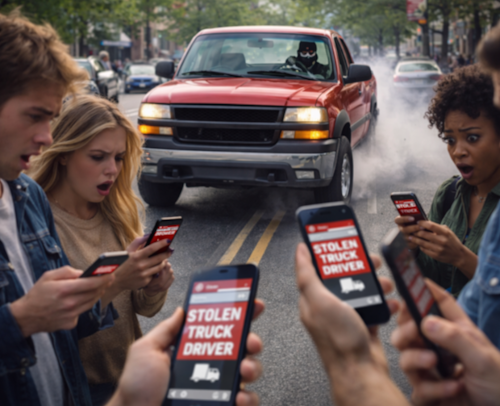
This week, those concerns were highlighted after the Crime Watch app sent out an alert reporting “Police seek red truck after robbery near Clark Rd“. I was actually listening to the radio and heard the same transmission. But what I didn’t hear (because it didn’t happen) was the fact there was a robbery suspect. AI-generated the summary incorrectly! The app’s alert was based on that transcription — not a confirmed police report. This also happened to be the same time school lets out with many teenagers ready to leave some rubber on the road which I have seen many times.
Plain and simple- technology is now shaping crime narratives in real time, sometimes faster than facts can be verified.
A Culture Trained to Watch
Media experts say the public’s appetite for crime stories — cultivated over decades — makes people especially reactive to alerts involving danger or criminal behavior.
“Shows like Forensic Files trained viewers to see every detail as a clue and every report as urgent,” said a media analyst familiar with crime reporting trends. “Now, with apps and AI, that sense of urgency is amplified.”
Unlike traditional journalism, which relies on confirmation from multiple sources, many crime-tracking apps prioritize speed and transparency, sometimes publishing raw or preliminary information. When paired with AI transcription, small errors can quickly become alarming headlines.
Balancing Awareness and Accuracy
Law enforcement agencies continue to encourage the public to stay informed but caution against drawing conclusions from early reports.
“Not every call turns out to be a crime,” one official said. “And not every alert tells the full story.”
Developers of crime-tracking platforms have acknowledged the need for clearer disclaimers and improved review processes when using AI-generated summaries.
The New Reality of True Crime
From grainy reenactments on Court TV to instant notifications on a smartphone, true crime has never been more accessible — or more influential. But as the tools evolve, so does the responsibility to separate fact from fear.
The red truck incident serves as a reminder that while technology can inform, it can also mislead — especially in a culture conditioned to watch crime unfold in real time.
As one longtime true-crime viewer put it: “We love the stories. We just have to remember they’re about real people — and sometimes, the first version isn’t the right one.”