


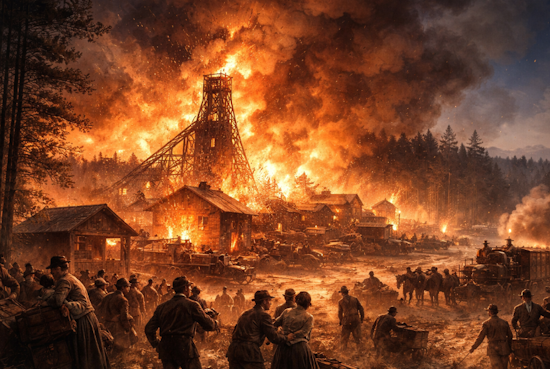
TRAVERSE CITY, Mich. — Long before Traverse City became the thriving northern Michigan hub it is today, fire played a powerful — and often devastating — role in shaping settlement patterns in the surrounding region. Major conflagrations in nearby communities illustrated the risks of 19th-century life in a heavily forested and wooden-built frontier and demonstrated the need for improved fire response and construction standards.
One of the most well-documented blazes struck the village of Lake Ann on July 4, 1897. This fire began in a large sawmill on the lakeshore and rapidly spread through the predominantly wooden business district and residences, leaving much of the town in ruins. Contemporary accounts indicate that dozens of homes and businesses were destroyed and “most people lost everything they owned” as the blaze swept through the community.
Traverse City’s volunteer fire department responded to the crisis. Newspapers of the day reported that a steam fire engine and firefighters were brought from Traverse City by special train to help battle the flames. When the equipment and men arrived amid heavy smoke, their efforts helped bring some parts of the fire under control.
Though exact population figures are imprecise, historians note that Lake Ann’s population fell sharply after the fire, from about a thousand residents to only a few hundred, reflecting the scale of destruction and economic disruption the community faced.
Fire was not a one-time problem for Lake Ann. According to regional historical research, the village suffered at least three major fires between the late 19th and early 20th centuries, each consuming significant portions of the town, including business districts and key structures.
These repeated disasters highlighted the vulnerabilities of early Michigan settlements, where homes and commercial buildings were built closely together from highly flammable timber. Small volunteer fire brigades and limited municipal resources struggled to cope with swift, wind-driven conflagrations that could overtake entire town centers within hours.
In cities like Traverse City, these regional fire experiences helped influence attitudes toward fire preparedness, construction materials, and infrastructure. Over time, local governments and community leaders prioritized more fire-resistant brick and stone construction in commercial districts, better water systems, and better-equipped fire departments, changes that helped protect later generations from similar destruction.
While historical records vary in the level of detail available and not all connections can be charted precisely, the broad pattern is clear: regional fires such as those in Lake Ann helped influence how communities across northern Michigan thought about growth, risk, and resilience.